Heavy-Duty Tow Bar Assembly
This project focused on designing a heavy-duty tow bar intended for military vehicle applications. The main goal was to create a practical assembly that could handle towing loads while also considering structural integrity, manufacturability, assembly feasibility, and overall production planning.
1. Project Goal
The purpose of this project was to design a heavy-duty tow bar assembly for military vehicle towing applications. The design needed to be strong enough to withstand towing loads while also remaining practical to manufacture and assemble. In addition to the CAD model itself, the project also considered how the tow bar would be produced, how the parts would fit together, and what costs would be involved in manufacturing.
2. Initial CAD Model
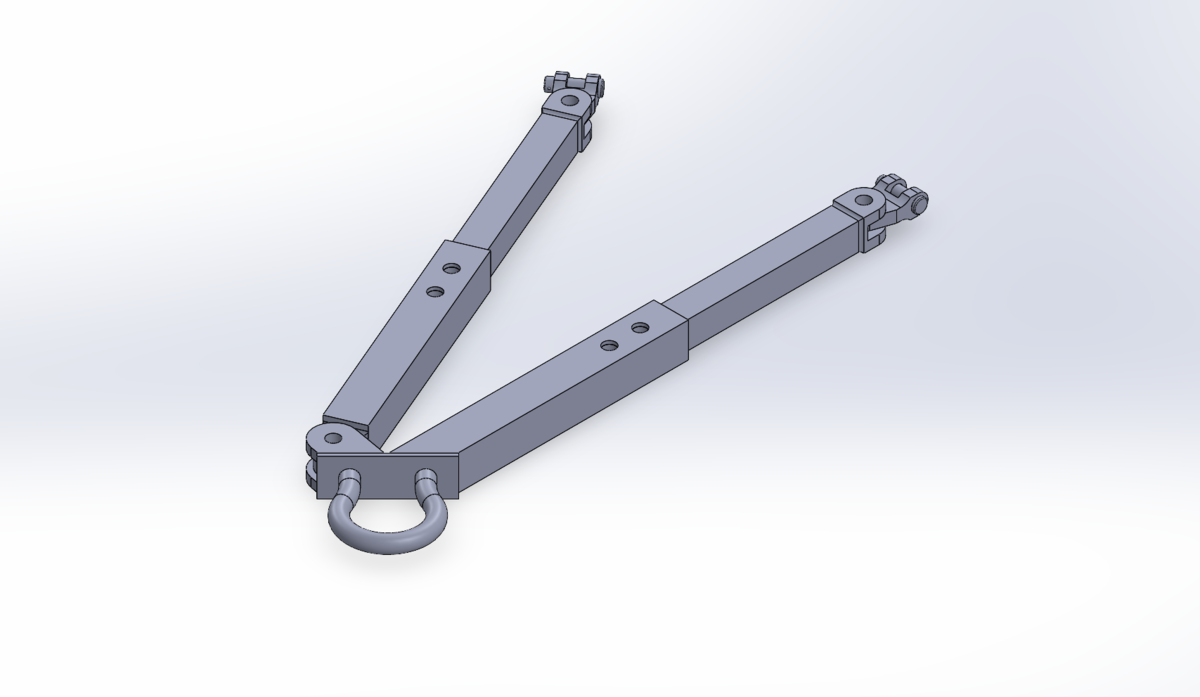
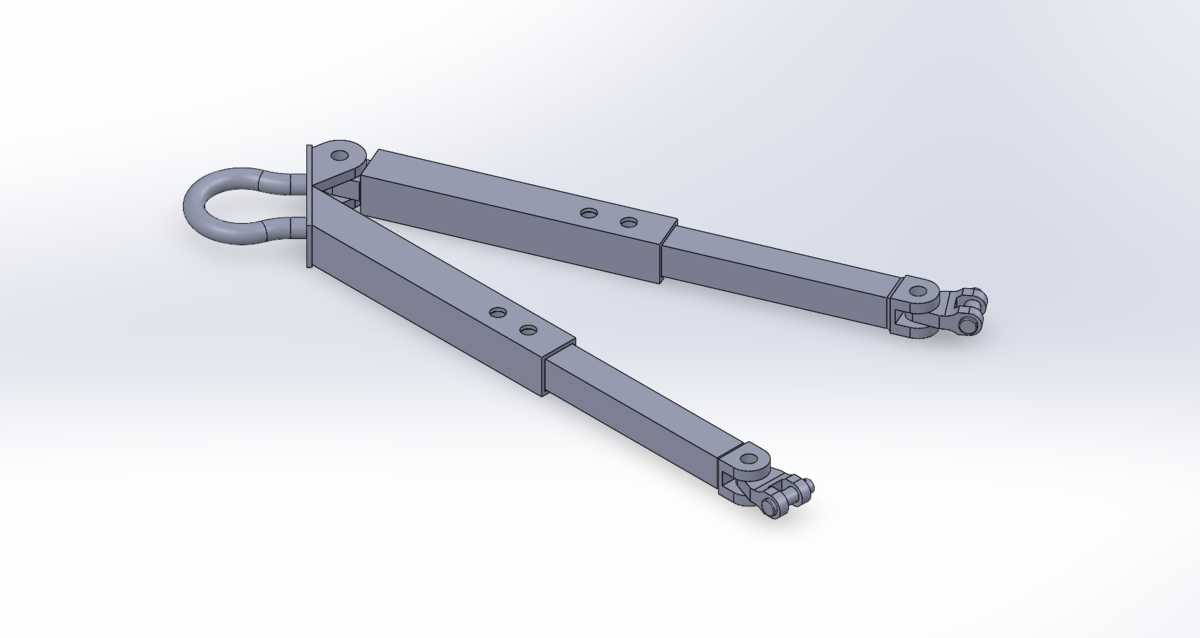
The project began with the development of the tow bar assembly in SolidWorks. This initial model established the main structural layout, towing connection points, and overall geometry of the design. At this stage, the purpose was to create a complete base model that could later be evaluated as a heavy-duty towing assembly.
3. Final Design
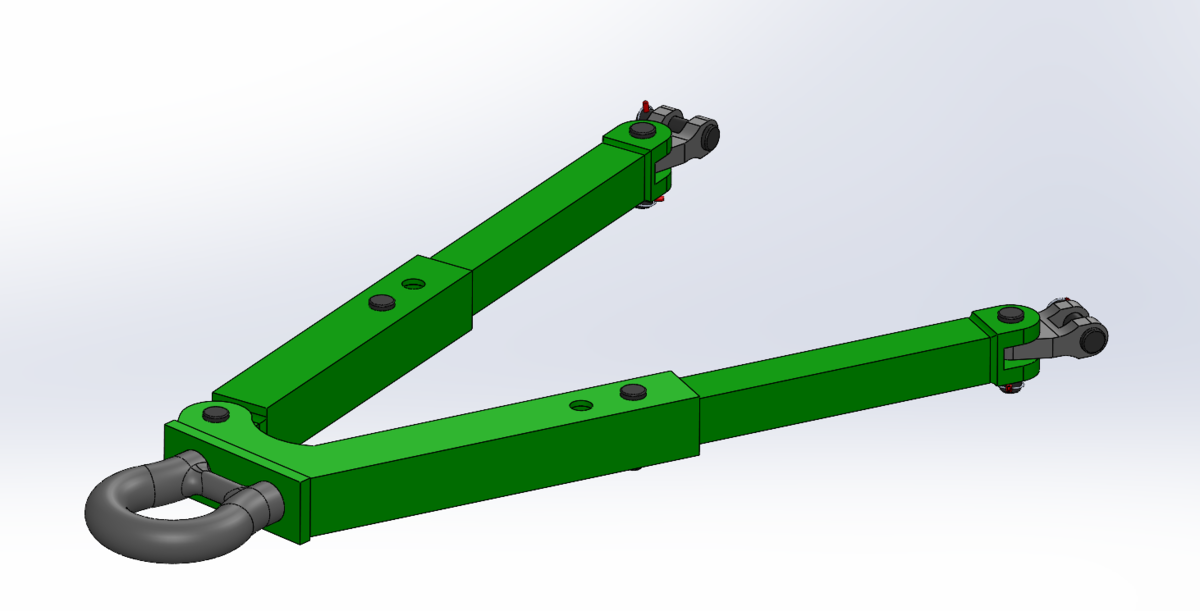
The final design remained close to the original CAD concept, since the main structure and layout were already established early in the project. The completed assembly represented a practical heavy-duty tow bar intended for military vehicle towing conditions, with consideration given to load requirements, structural layout, and assembly feasibility. The project also included manufacturing and assembly planning, along with a cost analysis chart, to better understand how the design could be produced in a realistic engineering setting.
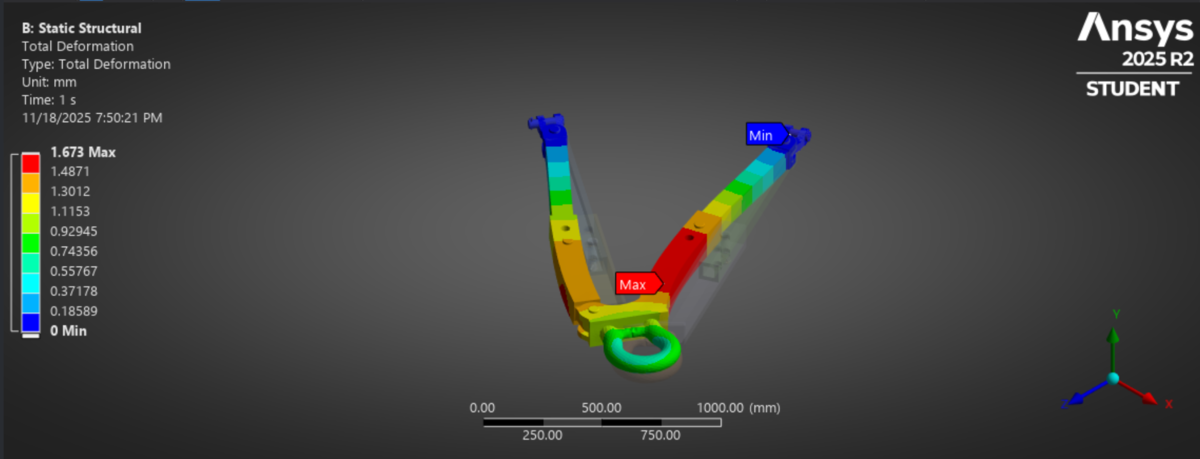
4. Finite Element Analysis Under Towing Load
To evaluate the structural performance of the tow bar, finite element analysis was performed under towing load conditions. This helped show how the assembly responded to the applied forces and provided a clearer view of stress distribution throughout the structure. The analysis was used to verify that the design could support the expected towing loads while remaining practical as a heavy-duty mechanical component.